

What Does Ultraviolet Protection Factor (UPF) Mean in Apparel?
By LogoSportswear
Sun protection is essential, especially if your staff or team work and play outdoors. As you learn about sun protection, you might encounter terms like UPF and SPF. But what do they mean and how are they different from each other? LogoSportswear explains what these two are and what they mean to clothing and to your team's safety against harmful UV rays. We also share tips on how to choose UPF clothing and headwear and provide a list of recommendations to get you started with your sun-protective team apparel.
What is Ultraviolet Protection Factor (UPF)?
Ultraviolet Protection Factor, or UPF, measures how much UVA or UVB rays a fabric blocks before they reach the wearer's skin. UPF ratings are classified into three levels: 15-24, 25-39, and 40-50+ - the higher the UPF rating, the more the wearer is protected from harmful UV rays. A UPF rating of 50+ allows only 1/50 or 2% of the sun's rays that can go through the fabric, which means it blocks 98% of UV radiation. Here's how UPF ratings work:
- UPF 15-24: Provides good protection; good start but not enough for long periods under the sun. Blocks 93-95.8% of UV rays.
- UPF 25-39: Offers very good protection; suitable for people who are moderately exposed to the sun like walking or gardening. Blocks 96-97% of UV rays.
- UPF 40-50+: Delivers excellent protection; best for those spending long hours under the sun. Blocks 97.5-98% or more of UV rays.
Is UPF the Same as SPF?
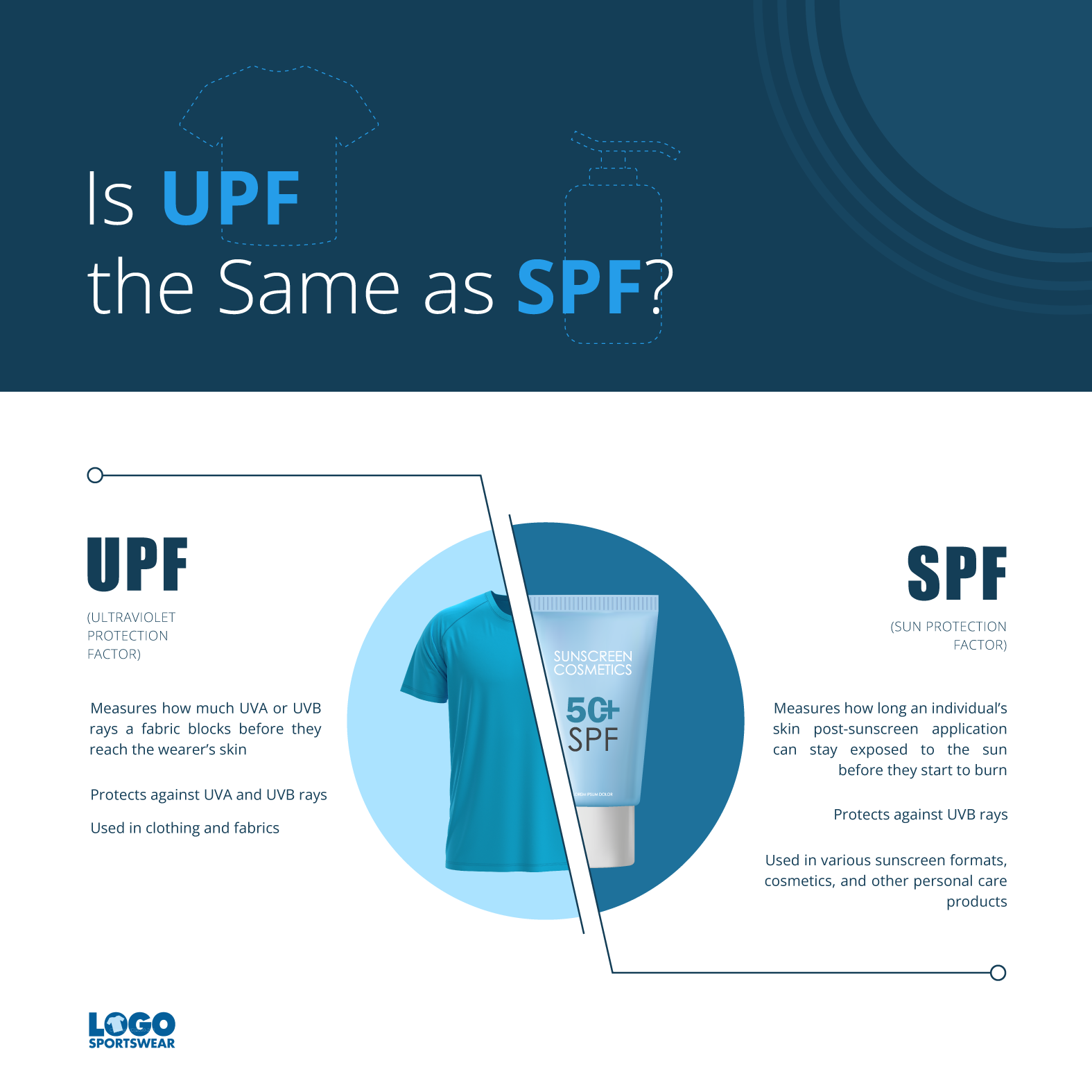
The short answer is no, UPF is not the same as SPF.
Sun Protection Factor, or as many of us know, SPF, measures how long an individual's skin post-sunscreen application can stay exposed to the sun before they start to burn. This means if your skin gets sunburnt within 10 minutes, using sunscreen with SPF 15 means your skin will stay protected 15 times longer or 150 minutes (2.5 hours). Furthermore, SPF only protects against UVB rays, while UPF provides protection from both UVA and UVB rays.
In the past, SPF was used to rate sun-protective fabrics until the Federal Trade Commission (FTC) standardized it to UPF. Today, you'll see SPF ratings in products like sunscreens, lotions, sprays, and cosmetics. To put it simply, SPF is for skin products and UPF is for clothing and fabrics.
9 Factors to Consider When Shopping UPF Clothing and Headwear
What should you look for when you're shopping for UPF clothing and headwear? Here are some factors to consider:
- UPF Rating and Skin Cancer Foundation's Seal of Approval: When shopping for sun-protective clothing, always look for at least a UPF rating of 30. Remember, apparel that has a higher UPF rating can block harmful UV better. We also recommend checking for the Skin Cancer Foundation's Seal of Approval, which guarantees that the products meet the organization's criteria for effective sun protection.
- Comfort: If your staff or team will stay under the sun for long periods, choose clothes and headwear that are lightweight and breathable. Loose-fitting clothes and comfortable headwear can help the wearers stay protected and cool even when doing outdoor activities.
- Coverage: Consider clothes and headwear with good coverage to reduce exposure to UV radiation. Long-sleeves, high collars, pants, wide-brimmed hats, and neck flap hats are great options to start with. Baseball hats and bucket hats will also provide coverage, but make sure to pair them with other sun-protective clothing.
- Type of Fabric: Tightly woven fabrics like denim and canvas can prevent UV rays better than cotton. Wet clothing can reduce a fabric's UV-blocking capability, so choose clothing made of moisture-wicking materials like nylon and polyester as these fabrics wick sweat faster, helping the wearers stay dry.
- Color: Go for dark or bright colors when choosing UPF clothing and headwear. These absorb UV radiation and won't easily penetrate the fabric unlike with white or pastel colors.
- Durability: Your team's UPF clothing should be durable so that it withstands regular sun exposure, wear and tear, and repeated washing. Otherwise, it could stretch out or wear thin and lose its sun-protective qualities over time.
- Style and Branding: UPF clothing provides an excellent opportunity to promote your brand while keeping your staff or team protected. Whether you're a small business or a sports team, pick UPF clothing that's easy to customize so you can add your logos or design and showcase your brand in style.
- Cost: UPF clothing may cost more than non-UPF apparel, but they're still a good investment for keeping your staff or team safe from harmful UV rays while they're outdoors promoting your brand. When shopping for UPF clothing, choose high-quality yet affordable brands, and look for providers that offer bulk discounts. This doesn't only help you make customization easier; it also saves you money, especially if you're ordering for a large group.
- Activity: Consider the type of activity your team or staff will be doing when shopping for UPF clothing. For intense outdoor activities, choose clothing that is breathable, moisture-wicking, and flexible. On the other hand, if it's for activities that are not as physically demanding, lightweight and comfortable UPF clothing should be enough.
LogoSportswear's Recommended Sun-Protective Products
Not sure which sun-protective products to customize? LogoSportswear recommends these top picks for adding your logo or design:
Polos
- UltraClub Men's Cool & Dry Mesh Pique Polo: UV protection, moisture-wicking, pill-resistant, and 100% polyester mesh pique
- Port Authority® Men's Dry Zone® UV Micro-Mesh Polo: UV protection, breathable, moisture-wicking, 100% polyester double knit pique, and snag-resistant
- Adidas Men's Melange Sport Shirt: UPF 50+ protection, 100% recycled polyester, and self-fabric collar
Hats
- Richardson Umpqua Snapback Cap: UPF 50+ protection, 70% cotton/30% nylon, and snapback closure
- Apollo Boonie Sun Hat: Maximum UV protection, wide brim, 100% polyester, and one size fits most
T-shirts
- Team 365 Men's Zone Performance T-Shirt: UPF 40+ protection, lightweight, 100% polyester, moisture-wicking, and athletic fit
- Hanes Adult Cool Dri® Long Sleeve Performance T-Shirt: UPF 50+ protection, 100% polyester, moisture-wicking, rapid dry interlock fabric, and FreshIQ odor protection
- Columbia Men's Terminal Tackle™ Long Sleeve Shirt: UPF 50, 100% polyester, and moisture-wicking
Quarter Zips
- Adidas Lightweight 1/4 Zip Pullover: UPF 50+ protection, 100% recycled polyester, and self-mock collar
While UPF and SPF both measure a product's sun protection capacity, they are still entirely different - UPF measures the effectiveness of sun-protective clothing, and SPF measures the effectiveness of topical products like sunscreens. Whether it's for outdoor work, sports, or events, it's recommended to double-up on sun protection. Remember to apply sufficient sunscreen on exposed skin and wear appropriate sun-protective clothing to ensure your staff or team is safe from harmful UV rays, skin damage, and other health risks.
